


Age- and Time-Related Changes in Serum Ferritin Levels in Danish Women: A Population-Based Longitudinal Study of 1,174 Women Over a 10-Year Period: Influence of Nutritional Factors
DOI:
https://doi.org/10.14740/fscn6Keywords:
Blood donor, Ferritins, Hemoglobins, Longitudinal studies, Menopause, Menstruation, Nutrition, Pregnancy, WomenAbstract
Background: A well-balanced body iron status is essential for women’s health. This study assessed iron status in Danish women in a longitudinal panel setting.
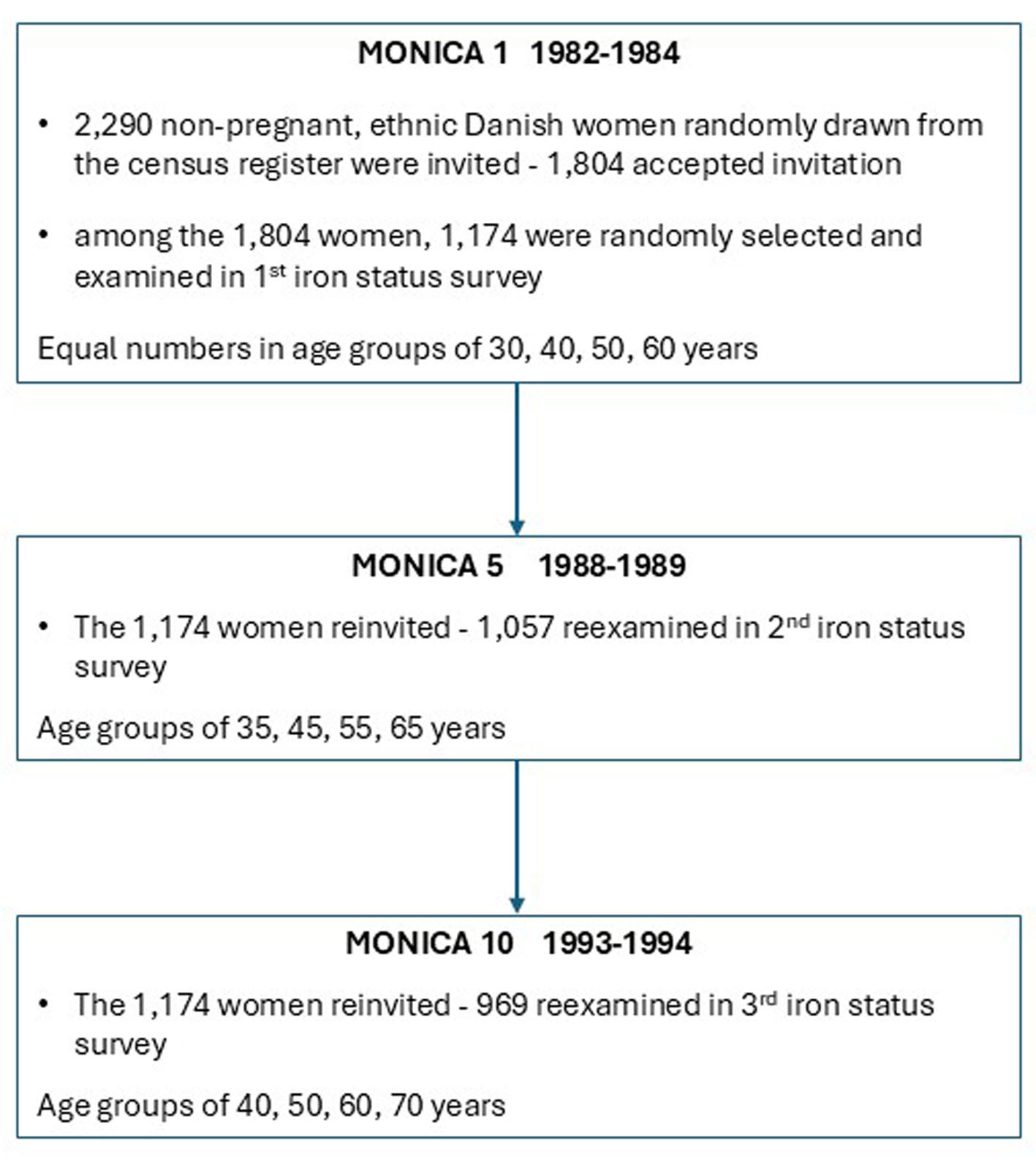
Methods: The study was part of the WHO DAN-MONICA health survey in Copenhagen 1982–1994, comprising 1,174 healthy women in age groups of 30, 40, 50, and 60 years, being invited for examination three times: at inclusion, and 5 and 10 years after inclusion. Blood samples were analyzed for hemoglobin and serum ferritin as a proxy for body iron reserves.
Results: Ferritin levels increased significantly with age from baseline to the end of the study, concurrently with an increasing prevalence of menopause. From MONICA 1 to the MONICA 10 survey, the frequency of high ferritin values > 200 µg/L increased significantly from 3% to 9% while the frequency of low ferritin values < 30 µg/L decreased significantly from 42% to 24%. There was an overall time-related increase in ferritin levels in 40-, 50-, and 60-year-old women in MONICA 10 compared to women of similar age in MONICA 1. After 65 years of age, there was no further increase in ferritin levels. Blood donors had significantly lower ferritin and hemoglobin and higher prevalence of iron deficiency anemia than non-donors but likewise displayed an increase in ferritin with age and time.
Conclusions: There were no indications that the time-related rise in ferritin during the 10-year period was caused by a higher frequency of inflammatory conditions or increase in body mass index. Even though dietary iron intake in premenopausal women is below recommended intake, an age-related increase in ferritin levels occurs, especially after the last childbirth and the menopause; this may be enhanced by an increased intake of meat and alcohol, especially in elderly women, during the observation period. This study suggests that in a female population, ferritin should be monitored with appropriate intervals in order to evaluate changes in iron status.
Published
Issue
Section
License
Copyright (c) 2026 The authors

This work is licensed under a Creative Commons Attribution-NonCommercial 4.0 International License.